Faith often begins in the quiet rhythm of tradition. For many believers, that rhythm is familiar and reassuring. There are prayers learned in childhood, rituals performed with devotion, and sacred places that seem to hold the echoes of countless generations. Yet, somewhere along the way, a question begins to stir within the soul: Is there something more?
For some, that question arrives softly, almost unnoticed. For others, it bursts through life like a flood, awakening a hunger for deeper understanding. What begins as routine suddenly calls for reflection. It is not that tradition has failed, but that the heart begins to yearn for relationship rather than repetition. This longing does not reject the beauty of sacred customs; instead, it seeks to breathe life into them, to find the living presence of the God those traditions were meant to reveal.
This is a journey that many people of faith will recognize. It is the passage from inherited belief to personal encounter, from learned doctrine to lived experience. It is what some might call a rediscovery—a moment when faith moves from the head to the heart. In this space, knowledge of God becomes intimacy with God, and the believer realizes that truth is not merely memorized, it is lived.
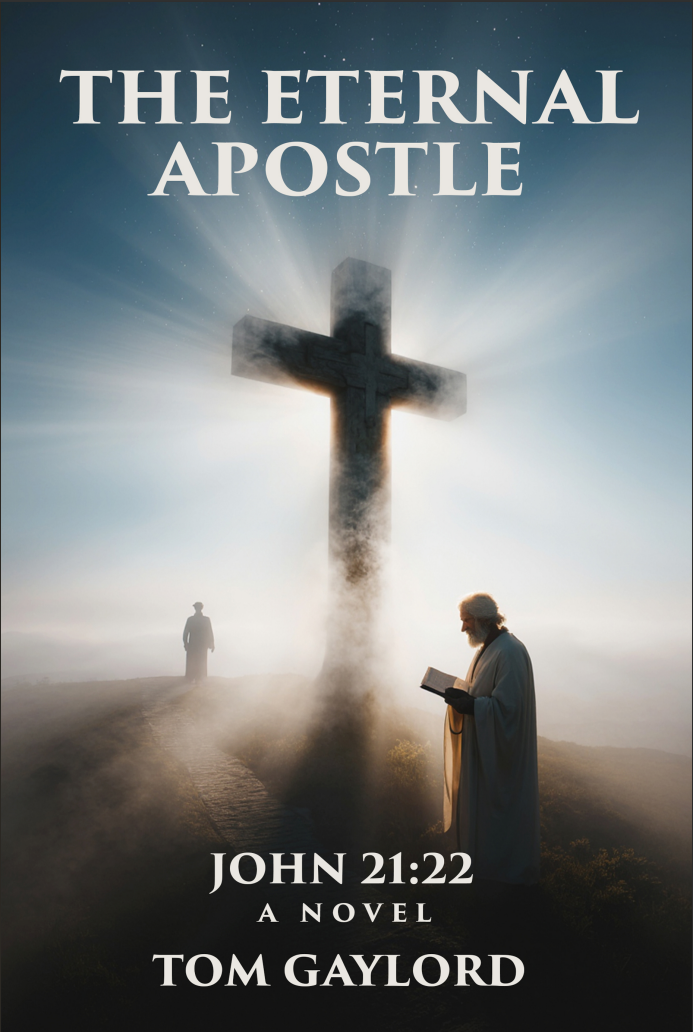
Tom Gaylord, author of The Eternal Apostle (John 21:22), captures this transformation through the story of a man who has known religion but is confronted by revelation. The novel unfolds with gentle precision, showing how faith evolves when touched by the Spirit. It reflects the path many have walked—from catechism and ceremony toward a friendship with Christ that feels real, immediate, and alive. Through its characters, Gaylord invites readers to see faith not as a set of obligations but as an open dialogue with a God who still speaks.
To rediscover faith is not to abandon the church or the structure that nurtured belief. It is to allow the Spirit to fill the empty spaces that ritual alone cannot reach. There is a moment when the familiar words of a prayer begin to carry new meaning, when scripture once recited becomes revelation, when forgiveness moves from concept to comfort. This awakening often feels like light streaming through stained glass, illuminating what was always there but never fully seen.
Many who have walked this road speak of it as both gentle and unsettling. It calls the believer to let go of control, to trust that divine truth will guide them beyond the boundaries of comfort. It requires honesty, humility, and a willingness to listen in the silence. The living faith that emerges does not erase the past but redeems it, weaving tradition into a tapestry of relationship.
In The Eternal Apostle, Gaylord reminds readers that spiritual awakening often begins with curiosity. The story of a photograph, a conversation, or a verse of scripture can open the door to a new understanding of grace. The novel does not preach; it invites. It shows that faith, when renewed by the Spirit, becomes less about obligation and more about invitation.
Living faith is never static. It breathes, questions, and rejoices. It finds God not only in the sanctuary but in the ordinary places of life—in family conversations, in quiet mornings, in moments of doubt that become encounters with mercy. It is a faith that prays not because it must but because it longs to.
For anyone who has ever wondered if there is more beyond the familiar pew or the polished altar, the answer is yes. There is a love that waits beyond ritual, a voice that speaks within the heart, a presence that transforms belief into belonging. To step into that living faith is to rediscover the God who has been waiting all along.
Faith begins in tradition, but it blossoms in relationship. The journey between the two is not a rejection of the old, but a fulfillment of it. It is the story of rediscovery—the story of every soul that dares to move from religion to revelation, from knowing about God to walking with Him.